Dirty Little Words

I cringe every time I see an industry article talking about mental health. They avoid two dirty words: Mental Illness

Why? The answer is threefold:

  1. They are hard to understand.

  2. While symptoms can be managed, there are no cures. Like Diabetes or other chronic illnesses, it is your everyday life. A full-time job to remain functional.

  3. No one wants to talk about it. It is ugly, perverse, exhausting and utterly devastating.

I get it. I do. I love that open discussion about mental health is common now. Two things can be true. 

Yes, OCD is a form of neurodiversity. It is also an illness. I was born with the genetic potential to develop OCD, but I did not ask for the trauma that broke my brain and rewired its pathways. I know I could function better without it. That is simply a fact. I also know that this invisible disability has shaped who I am.

I was eight when my symptoms first appeared and fifteen when I was officially diagnosed. Not a lot was known about OCD back then. I learned to see it as a possession. A demon. Therapy became a fight for control, a tug of war over who had the power.

Years later, we now recognise many subtypes of OCD. Treatment approaches have improved. Mine, codenamed Polly, is a chameleon. It refuses to fit neatly into one box.

My ongoing journey toward functionality is long and expensive. The government needs to change its approach to supporting people with mental illnesses. We need more than ten subsidised sessions a year.

OCD representation is difficult because of how diverse and varied the condition is. Everyone’s OCD is a little different. It does not help that the illness continues to grow and adapt along with the person.

I barely passed my first university script class because of my first attempt at portraying OCD. It did not translate. No one understood why ensuring the kettle was unplugged before leaving home meant life or death.

I kept trying, but the feedback was always the same: too dramatic, too fantastical. 'Plushed' came close.

When I started writing 'Wren Findley', I realised I had to do the thing I feared most. I had to open the gates to hell, meaning my mind, and let people see the horror show for themselves.

That does not mean Polly in the books is exactly the same as the one in my head. Like Wren, she is a unique individual. This meant researching how to build a similar but different OCD. One I could somewhat influence.

Book 1 of the six-part series was about accepting the help of others and the beginnings of a healing journey. It brought the team together and helped each of them recognise that they needed one another.

Book 2, much like this blog, will see the characters commit to that journey. Wren will come to know her OCD more intimately. It won't be a boogeywoman anymore. It has feelings and motivations, and it is part of her.

Wren Findley and the Horror at the Tower of Babel 

Here I am again. Writing another abstract for a report that someone could just read. Yippee. Spin. Spin. Spin. Shake. Shake. Shake. The universe can crash and burn —T-Rexes will still lodge their taxes. This second book is written by me, Wren Findley. I’m a mentally ill teenage Time Thymus assigned to MR-1. This is the mission where we tried to stop the bad guys from tearing apart the foundations of reality. No pressure. It’s filled with crazed humans, confused dinosaurs, and fear itself. In the ancient deserts of the Bermuda Triangle stood the Tower of Babel. Here, humanity’s greatest artists were imprisoned. Their imaginations had taken physical form —and they were angry. To lead us through, I had to make a truce with my horrifying corporeal OCD. Because when the maestro’s scythe falls, only the broken will see true.

Welcome to the Wrenverse

Stories are how we make sense of ourselves and the world. The trick is to not let your mental illness weaponise it. 

As a teenager diagnosed with OCD, hours of my mornings were spent checking to see if the front door was locked. I used to get to school, only to have to walk back home and then back again several times.

M*A*S*H, on every weekend day at 5pm, became an anchor in the swell of overpowering thoughts. The characters and stories of them finding a way to survive the challenges of being trapped in a front-line medical unit helped me process my own. Later, JD’s monologues in Scrubs helped me clarify my place in the world. Hell is always nicer when you have someone to walk through it with you.

Domestic violence darkened my household. I needed a friend to take into battle. Luckily, I had story worlds to draw from. My Generation 1 Optimus Prime toy stood by my side. He could kick ass. Later, Hans (my plush T-Rex mental health carer) tagged in.  He is cooler, of course. More modern. 

Two of the four times I tried to commit suicide were when I felt detached from my beloved narratives. I didn’t feel connected to the things that help me keep grounded. 

As a writer, I’ve been quiet for a few years now as I’ve been rebuilding from my latest (hopefully last) suicide attempt. The stalling of my creative endeavours had left me lost and hopeless. Even thinking about anything new was taxing. 

Alongside years of intense therapy, the help of Hans and my dear network of friends has seen me become functional again. Trauma therapy is hard. FYI.

Hans, ever the proud genius, suggested that we could combine two of our older stalled projects into something new. For the past few years, we’ve been working on an Upper Middle Grade science fiction novel.

Wren Findley and the Call of the Pied Piper.

“I don’t understand why I need to write an abstract for a field report. People can read my account… T-Rexes and paperwork. Sigh. Whatever. This thing is written by me, Wren Findley. I’m a teenage Time Thymus assigned to MR-1. This tracks our journey to unmask the douchebag kidnapper who calls himself the Pied Piper. Along the way, we battle Devil Frogs, robots, and ninety-foot Snake Queens. I discover I’m part of some prophecy and meet my Utahraptor teammates, Hans and Gomez. You’ll probably get frustrated with how much OCD comes up. It frustrates me too. Sadly, it’s part of who I am. Not sure what’s more complicated — dinosaurs, mental illness, or time travel. Maybe I’ll figure that out one day.”


A deeply personal journey, each chapter reflected a life lesson in the real world. I found myself healing. The characters were allowing me to grow with them. Wren’s OCD has become so authentic that I’m actually (irrationally) worried about giving readers the illness. 

Some other victories include:

  • Finding my audience

  • Writing in third person and utilising past tense

  • Jumping the shark twenty times (at least — it’s part of the story world’s DNA)

  • Being able to embrace elements from my favourite stories and make them my own. 

The Book is finally ready to be sent out into the world. I am ready for that challenge (#publishme). 

This also means I’m ready to dive into Book 2 of the six-part series. As part of my continued healing, I’ve decided to bring you along for the ride. Each week (or fortnight), I’ll post a new entry about what I’ve learned,  my ongoing progress, and maybe even drafts of chapters.

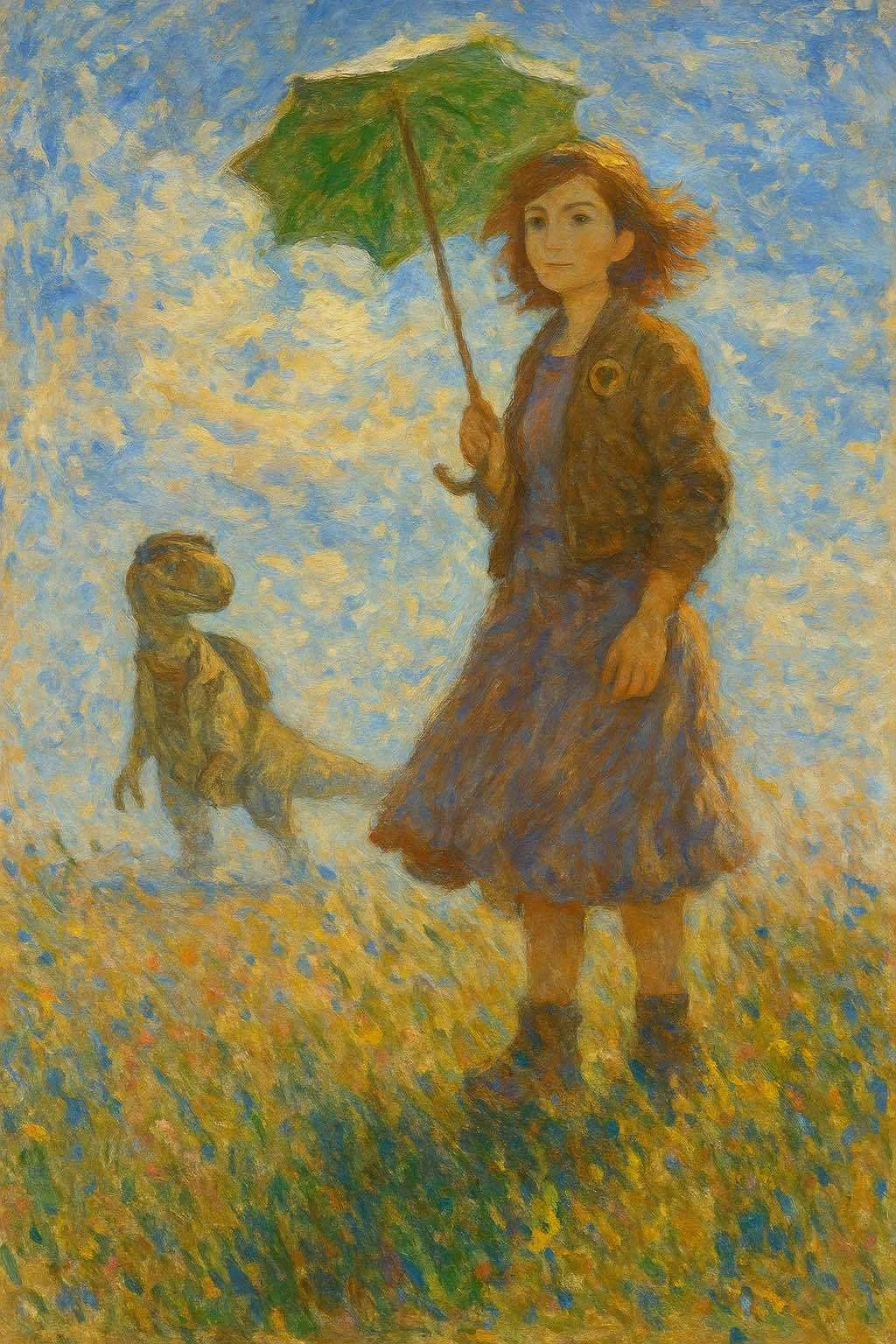
For now, here is a teaser poster for Wren Findley and the Horror at the Tower of Babel.